
It was about 11:15 a.m. on Sunday, January 25, when my United Airlines flight from Sarasota, Florida, landed at O’Hare International Airport, and I finally started getting text messages again. The very first one was from Angel, our 22-year-old grandson, whom I had asked to pick me up upon arrival, so that I could drive across town, mostly on I-90, to an annual congregation meeting at our church in Hyde Park. He said he did not feel comfortable driving to O’Hare under current conditions. Could I take the CTA Blue Line to the station near our house and let him pick me up from there?
Our plane had just landed and was taxiing to its assigned gate. I had a window seat, and I could easily see that the snow was blowing and snowplows were clearing runways. He is probably right, I thought, and the meeting is not important enough to ask him to drive to the airport in this weather. The pilot had announced before our descent that the temperature in Chicago was 12°F. I knew from weather reports on my cell phone even the night before that thousands of flights in the eastern half of the U.S. had been cancelled because of a huge storm stretching from Tennessee to New England. I could count my blessings that the weather in Chicago was at least clear enough to allow my flight to land on time.
Less than 24 hours earlier, however, I had joined a friend of mine, David Taylor, on a group boat excursion out of Bayfront Park and Marina in Sarasota, sponsored by the Sarasota-Manatee Ohio State Buckeyes Club. The boat, with 114 passengers, passed under the Ringling Bridge, circled Bird Key and passed Lido Key, with people gazing at a long line of waterfront mansions. The hell of it, on January 24, no less, was that the afternoon temperature during our cruise was 84°F.

Aboard the excursion boat out of Sarasota
The idea that I would even think of returning to Chicago the next day amid a vast snowstorm seemed unthinkable to many of my new acquaintances as we sipped beer, ate pizza and meatball sandwiches, and listened to a musician gin up our dancing nostalgia with rock music of the boomer generation. Most of those I met were Ohio transplants who expressed relief that they had left behind the very weather to which I would return.
Why, some asked, didn’t I just move down there as they had done?
You can’t ask a veteran urban planner a more complicated (and loaded) question. I did not want to ruin a good time by answering. I shrugged and said I was happy in Chicago. But saying that to one or even two or three people at one time did not prevent the question from recurring as I met others. And, God knows, a compulsive extrovert like me can end up talking to quite a few people before his two-hour floating paradise has run its course.
But where to begin, other than to shrug the question off and say my flight appeared to still be on time and that we would leave Dave’s house around 6:30 a.m. the next day? (At that time, it was already 65°.)
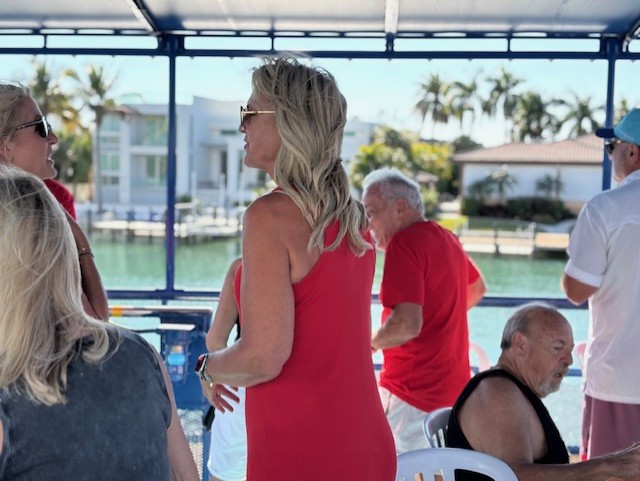
Aboard the boat. Mansions are in the distance, on the Key.
Knowing how southern Florida is struggling to expand its highway and urban infrastructure to accommodate the population growth already occurring, I might question just how many more of us from the North these people really wanted in their communities. I’m not even convinced that Floridians even think about that before bragging about their weather, although I do know that such boasting goes into temporary hibernation after a hurricane, only to re-emerge a month later. Sunshine is a beguiling charm, although rising insurance costs and climate change may put a damper on it someday. A casual observer could easily be forgiven for thinking that Florida politics is largely driven by the real estate industry.
As a veteran planner who specialized in issues of hazard mitigation and disaster recovery, I also know that no part of the world, including the Midwest, is immune to impacts from climate change. Addressing that, in fact, was why I was visiting in the first place. Dave and I are co-producers of a documentary film on disaster resilience, Planning to Turn the Tide, and we were working on a segment about Iowa all week long. In 2020, Iowa suffered huge damages from a derecho with winds ranging from 100 to 140 miles per hour, which some labeled an “inland hurricane.” The high straight-line winds reached Chicago, spinning off eleven tornadoes in Illinois before it lost steam in Indiana. Right in the middle of a pandemic, no less.
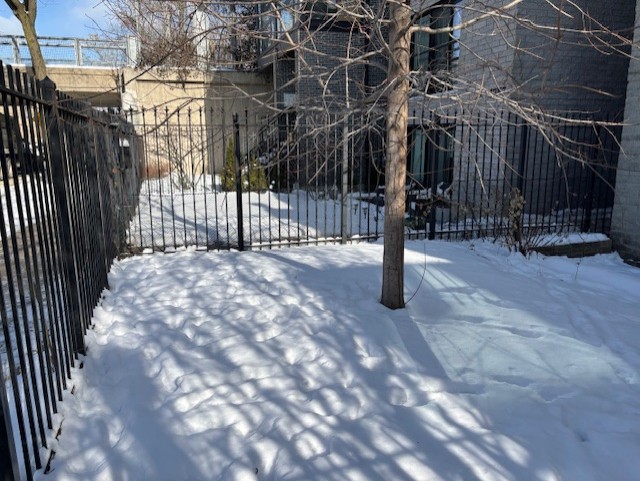
Welcome home to my front yard
But summers in Chicago are generally gorgeous, and we have enjoyable weather most of the time between April and October, with November at least being tolerable before winter sets in. By then, we like to talk about “Bears weather” being an advantage for our favorite football team. On January 18, as lakefront temperatures plunged, media discussion centered on the sub-zero wind chill at Soldier Field. It’s such a significant advantage, in fact, that as Dave and I watched on his living room television, the Chicago Bears fell to the Los Angeles Rams, 20-17, in overtime in the National Football Conference division playoffs. Someone forgot to tell the Rams that they were out of their element. Maybe next year?
If football is not your thing, we also have two Major League baseball teams, both an NBA and WNBA basketball team, a hockey team, a soccer team, and 20 miles of waterfront park along Lake Michigan without being squeezed out by millionaire mansions and high-rises lining our shores. That park includes hiking and bicycle paths. “Forever free and clear” is a rallying cry for savvy Chicagoans who are ready to fight whenever some oligarch wants to intrude on our lakefront. Just ask George Lucas.
In truth, though I enjoyed the Bears playoff run this year, I do not live in Chicago because of football. Or even sports generally, although I love sports. I grew up in the Cleveland area, lived in Iowa for several years, and married a Nebraskan before we both ended up in the Windy City, which earned its moniker from bloviating politicians, not the weather.
I like living in Chicago because, unlike most of Florida, we have a mass transit system that covers almost the entire city. CTA trains can take you from the O’Hare and Midway airports to downtown Chicago in thirty to forty-five minutes for $5 or less. As an author, music lover, and cultural bon vivant, I love access to a stunning array of museums, cultural attractions, outdoor festivals in the summer and fall, and literary, musical, and other events that could keep anyone’s calendar busy. If you want dinner before or after or without such events, we have a broad diversity of culinary opportunities, the likes of which can seldom be found elsewhere, New York and LA being possible exceptions. I have told visitors for forty years that if they name their preferred ethnic cuisine, I will find the restaurant, and I usually do so without even consulting Google. No one has ever stumped me.
In short, although it can certainly get cold in the winter, Chicago can be lots of fun. We have our problems, but so does everybody else. And I love the marvelous diversity of our people, even if federal agents from ICE and Border Patrol chose to see them as targets in a happy hunting ground for undocumented immigrants in recent months. Chicago stood up to these invaders and is ready to resist if they return.
Should I choose to visit Florida, as I recently did, I will fly from an airport that can offer non-stop flights to every destination that matters and many that perhaps don’t. Many, like Sarasota, are nice places to visit. I have enjoyed their hospitality. But I will continue living in Chicago.
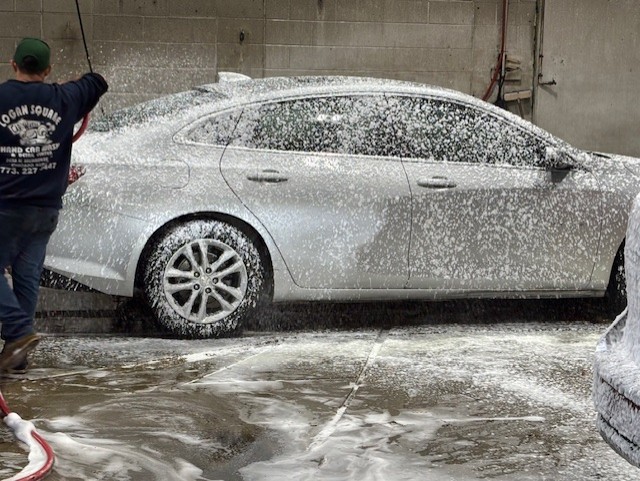
At the car wash to clean up all that slush and snow. Thanks to Logan Square Hand Car Wash & Detailing, “Your Malibu is ready.”
Jim Schwab