

I had a dream a few weeks ago. Most of my dreams are fleeting and inconsequential. Not so this time. My overladen subconscious mind took me to this empty room, then made me fill it with all that had happened since my “alleged retirement”[1] from the American Planning Association (APA) a little more than eight years ago. I thought of the projects I had undertaken and the clients I had served in my sporadic and largely (but not always) part-time consulting. Every project was a privilege, an honor, an offshoot of a long career that preceded my departure from APA. APA itself was a client initially, but life moved on.
I realized that most of the most cherished awards that I now look back on were received since then, except for FAICP, which was bestowed in 2016, just one year before I left, at a crucial juncture in my career and before I had finalized my decision to do so. My dream did not detail all of it. Dreams seldom do that because they just do not function that way. Instead, my dream simply kept filling my mind with a sense of wonder and the realization that recent obstacles to my next steps were simply enabling my next steps. They were preparing me for a new commitment.
I have not fully felt that sense of commitment in recent weeks because I was allowing my anxious mind to be filled instead with a sense of frustration that sometimes overtakes me when life is not as straightforward as I often wrongly think it should be. I have a streak of perfectionism that can get in the way of taking in stride life’s numerous detours, some of which have slowed my intentions in “alleged retirement,” but none of which have derailed them. That which does not kill you makes you stronger? Maybe, if patience is strength. I retain a passion for wanting to blow past obstacles when I sometimes should learn from them. After all, I honed a career addressing disasters, the one subject many planners had long preferred to ignore because they are what can derail the best-laid plans unless one’s plans take them into account. (Most of the time, most of us do not do that.)
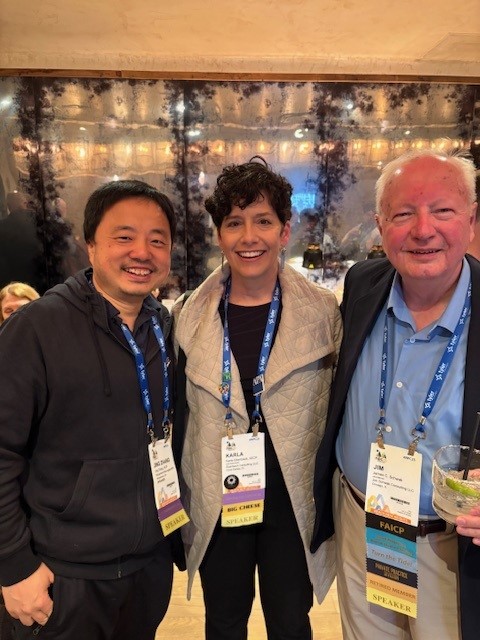
Jim (right) with Karla Ebenbach and Zhing Jang, APA division leaders, at APA conference reception for Hazard Mitigation and Disaster Recovery Planning Division, Denver, March 31, 2025
I mention all this because I began to realize recently that I had allowed a three-month gap to grow since I last published an article on this blog. Many things happened in the interim. One involved my wife and I taking care of three infants starting in early April, just three days after I had returned from an APA National Planning Conference (NPC) in Denver, and ending five weeks later after we told a case worker from Lutheran Social Services of Illinois that we felt we were just not up to the task. The placement began with a late-night call concerning some disturbing circumstances that led to an Illinois Department of Child and Family Services (DCFS) case worker dropping them off in the middle of the night. I don’t wish to explain it all except to say that we were contacted as an extended family option. At the outset, I stated that we were not likely a sustainable placement for toddlers ranging up to two years old, considering that we were both in our late seventies. But such matters frequently evolve from one agency to another with different workers along the way, and we had to make clear that finding a younger foster parent(s) would be much better in the longer term.
During this time, our core team for a film in progress on planning for resilience against natural disasters, about which I have written in the past, held its first of three showings of an initial 20-minute segment of Planning to Turn the Tide to get feedback from a professional audience. This occurred on April 25 during the virtual portion of the NPC, attended online by 329 people. On May 18, I was flying to New Orleans for an onsite May 21showing at the annual conference of the Association of State Floodplain Managers (ASFPM) in New Orleans. The final showing occurred onsite at the Natural Hazards Workshop in Broomfield, Colorado, on July 13. These presentations helped grow our volunteer base with specialized talents including grant writing and infographics. More on all that in a moment. Each presentation involved travel and logistical preparations, setting up discussion panels, and capturing feedback including comments, questions, and suggestions.
When I returned from New Orleans, I quickly learned my wife had some eye scratches known as corneal abrasions, and I had to do all the driving because she was struggling with glare. Between an urgent care center, an emergency room, and eventually her own ophthalmologist, it all got better, but in the meantime, our washer died, and my driving included taking Jean to the laundromat. I struggled to get a nonresponsive Sears Home Warranty to fix it (I finally insisted on canceling the warranty when they failed to show up), and Best Buy installed a new washer-dryer tower. Back to normal yet again.
Brunch at 82 Queen, Charleston, for our 40th anniversary.
Before I ever got to New Orleans, I experienced one small annoyance by falling after slipping on a sheet that slid out from under me in our home, producing a badly bruised big right toe. That happened on May 13, the day of a book awards banquet for the Society of Midland Authors, of which I have long been an active member, and I insisted on attending despite my discomfort. In early June, Jean and I flew to Charleston, South Carolina, for a weekend celebration of our 40th anniversary. There and later in Broomfield, I enjoyed the hotel swimming pool. I tried to ignore the foot injury and flew to New Orleans and Denver before seeing a podiatrist in late July, though I can at least say he did not have an opening until three weeks after I called. All is well now, but I should have seen him earlier to better prevent complications.
I think you can begin to get the picture. I can get stubborn and persistent in the face of life’s minor aggravations, but I also found no time for this blog and struggled to find time for other long-standing priorities. Despite some accomplishments and some good times, my frustrations were becoming palpable—in part because I could not blame just one big thing, but rather a lingering parade of distractions.
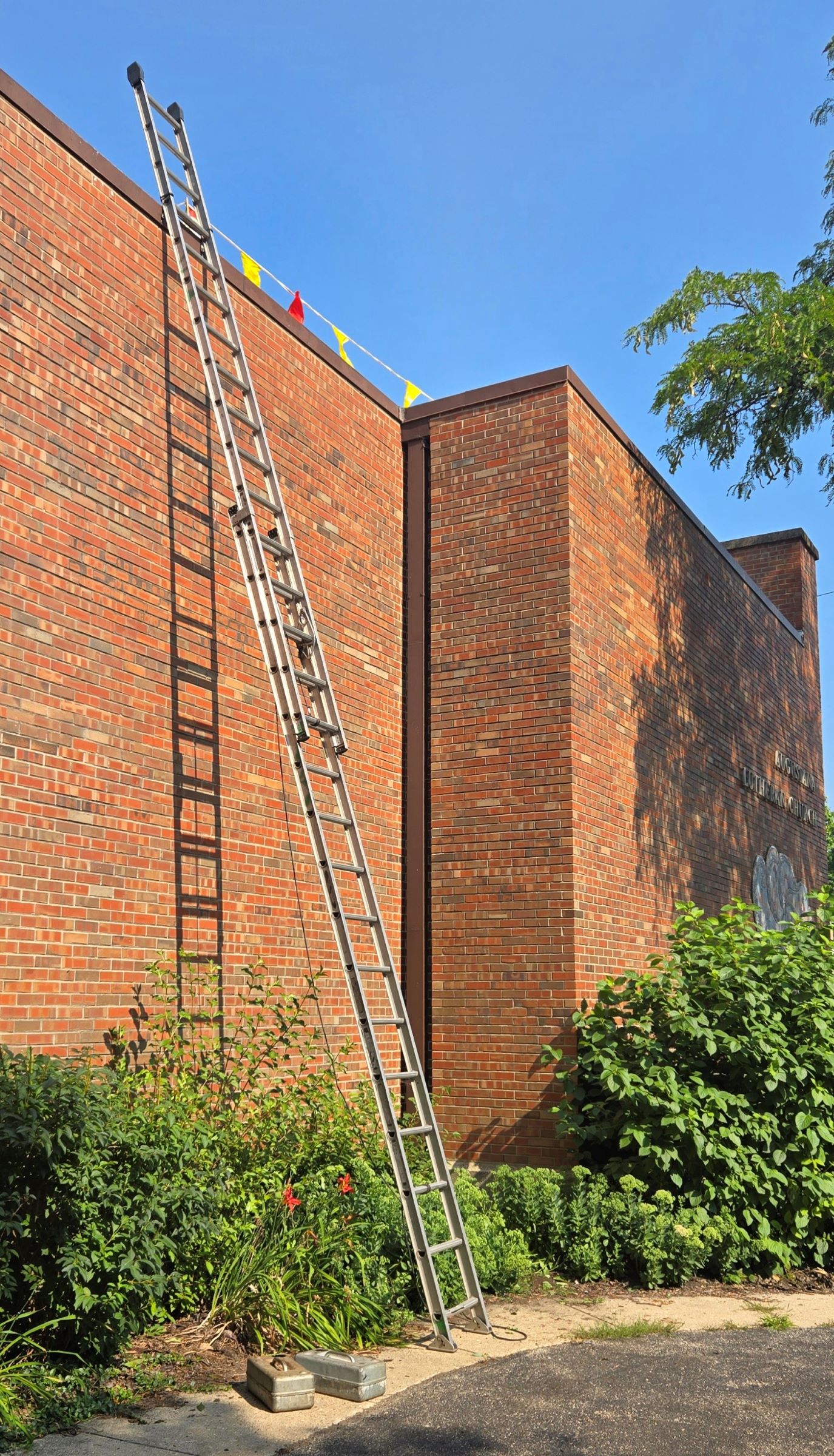
The ladder is up for first day of roof work at Augustana. Photo by Jim Vondracek.
But today is another day. We watched a granddaughter graduate from high school yesterday after persevering in the face of obstacles, and she is already enrolled in City Colleges of Chicago for the fall. And today, after months of delays, encounters with bureaucracy, and numerous necessary preparations for a complex project, work began on a new roof for Augustana Lutheran Church of Hyde Park, of which we are members. That work is in preparation for installing a rooftop array of solar panels that are projected to generate slightly more electricity overall than the building uses. The project is the result of a successful $250,000 grant proposal to the Chicago Climate Infrastructure Fund that I wrote on behalf of the congregation and its Green Team two years ago. We learned in February 2024 that we were grantees, and the rest has been a long journey toward implementation, which is now occurring. I could not be happier. One of my dreams is coming true, but more importantly, it is serving the needs of the entire community and the planet itself by reducing reliance on fossil fuels. We expect the project to be completed sometime this fall. I will write more about its completion when that day comes.
Dreams are not just subconscious explorations of the chaotic range of themes in our lives. They can be the conscious wishes of our better selves. Beyond a solar church, what I dream of now is completing the film, which badly needs either a modest or larger grant, more contributions (you can help here), and/or some angel investor in a nonprofit, largely volunteer project aimed at inspiring people to learn more about planning for natural disasters and, ideally, to get involved. I also dream of completing the writing of a book that I envision as a combination of professional memoir and planning history concerning the emergence of disaster resilience as a primary focus of the urban planning profession.
My brain is still trying to fill that empty room. The room is not really so empty, but it is small wonder that my subconscious mind that night saw it that way. It knows that I have the means to help fill some of the void left by our society as it gropes its way toward sanity. We all have things we can do and talents that can help to address some of those voids.
As for the blog posts I failed to find time to write, all I can tell you is that Jimmy’s back, and it feels good.
Jim Schwab
[1] “Allegedly retired” is a phrase of my own invention, as a self-effacing reference to my preference for remaining involved and not wanting a “retirement” of pure leisure and no commitment. At my retirement party, I smilingly announced my “five-point retirement plan,” which some regarded as no retirement at all. My criteria were (a) meaningful engagement in the world and (b) intellectual stimulation. Sometimes I made money, but often I worked pro bono for the sheer enjoyment of what I was doing.