
News
 NEW OPPORTUNITY: Jim Schwab’s Graduate Planning Course Online This Fall
Registration is open now. Jim Schwab’s long-time University of Iowa course, “Planning for Disaster Mitigation and Recovery,” a graduate=level course in the School of Urban and Regional Planning (SURP), is being offered for credit online this fall. The fall semester at Iowa begins August 26, but registration is open now. Download the flyer at the link below for information. Students at other universities may need to check with their own institutions for transferability of credits, but SURP is a PAB-accredited planning school. If you’ve been wondering about or seeking a course that will educate you on hazard mitigation, disaster recovery, resilience, and climate adaptation, this may be your best opportunity to learn from the best. Enroll now!
Click here for more information.
Click here to register.
Click here to download the course flyer.
Questions? Email Jim at jimschwabfaicp@outlook.com
Schwab Receives Prestigious ASFPM Award
Jim Schwab has received the most prestigious award of the Association of State Floodplain Managers. The announcement of this rare award occurred at the ASFPM annual conference in Phoenix during the awards luncheon on Thursday, June 21.
 The ASFPM web site describes the award as follows: "The Goddard-White Award is named in honor of the contributions made to floodplain management by Gilbert White (1911- 2006) and Jim Goddard (1906-1994). This award is given by ASFPM to individuals who have had a national impact carrying forward the goals and objectives of floodplain management. It is an indication of the level of esteem the association holds for the two namesakes as well as the recipients, and is ASFPM's highest award. It is not necessarily presented every year."
Jim joins a list of nationally-recognized advocates for hazard mitigation and disaster recovery that includes Jon Kusler, Executive Director of the Association of State Wetland Managers; French Wetmore, co-author of FEMA's Community Rating System; Mary Fran Meyers, former co-director of the Natural Hazards Center; and the late Margaret Davidson, Director of NOAA's Coastal Services Center (now the Office for Coastal Management).
The Association of State Floodplain Managers is an organization of professionals involved in floodplain management, flood hazard mitigation, National Flood Insurance Program, and flood preparedness, warning and recovery. ASFPM is a respected voice in floodplain management practice and policy in the United States because it represents flood hazard specialists of local, state and federal government, research community, insurance industry and the fields of engineering, hydrologic forecasting, emergency response, water resources and others.
Congratulations, Jim!
(In the photo, left to right: Larry Larson, ASFPM Director Emeritus/Senior Policy Advisor; Maria Cox Lamm, ASFPM President and NFIP Coordinator for South Carolina; James Schwab; and Ingrid Wadsworth, ASFPM Deputy Director.)
 Departure from APA
I know that for many people in both the professional hazards community and the urban planning profession, my name has become virtually synonymous with the American Planning Association’s Hazards Planning Center. I was present at the birth of the Center, shepherded its creation, and have presided over APA’s many hazard-related projects and initiatives for more than two decades. But there is inevitably a time to move on, either because it is good for the institution to renew itself or because one needs new challenges. I have decided that time has come; as of May 31, 2017, if all goes well, someone else will step into my shoes as the manager of that Center. I express my philosophy of such transitions, and about this one in particular, in my blog entry of January 21, 2017. Nonetheless, discussions with the University of Iowa Press have led to the idea we are currently under consideration of a two-book series in order to keep the project more manageable.
Between now and then, I will continue to manage our existing projects, most of which are listed elsewhere on this website and are detailed thoroughly on APA’s website. I will also assist APA in its search for a replacement, and I encourage anyone who can meet the requirements APA has listed in the position opening to apply. We are looking for credentials and talent, but also for vision. 
Retirement from APA—and those two words “from APA” are critical—will free me to pursue some other long-term goals and visions, and to some extent, to spend more time outdoors, more time reading what I have not had time to read, and perhaps more time to travel with my wife, Jean. Some of those goals have been discussed below for a while, but they take on an entirely new context this summer. I will leave APA knowing, in good conscience, that I leave behind a program that is in solid shape, with ongoing project commitments and a sterling reputation in the relevant professional communities. The fact that many people in APA feel that I am leaving a huge gap by departing is fine. What would be so good about leaving a small one? That would suggest an equally small contribution to the planning profession. It is better that my successor feel challenged. He or she may rise to great heights as a result.Local officials in Cedar Rapids, Iowa, have annually hosted my University of Iowa graduate planning students for an all-day field trip to see their flood recovery efforts. The many initiatives of the Rebuild Iowa Office have shed new light on state-led efforts for flood recovery that I find intriguing. In any event, I learned to love Iowa during the seven years (1879-1985) that I spent there as both a civic activist and a graduate student at the University of Iowa, where I studied urban and regional planning and journalism.
Goals for the Future
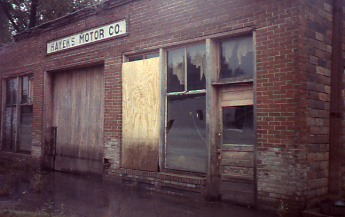
One of my long-term goals in recent years has been to research and write a history of the 1993 and 2008 Midwest floods. My initial intent was a history of the 1993 floods, but I had not gotten very far in developing the idea before disaster struck again, this time primarily and most ferociously in Iowa, rendering the original idea painfully incomplete. As difficult as it was to contemplate pasting together the events of two major regional floods 15 years apart, it was apparent to me that there was no alternative. What we learned from the first event had a great bearing on what we were willing to learn from the second. The impacts of the two disasters were inextricably linked. Old lessons led to new lessons. One could not publish a history of one without somehow discussing the other.
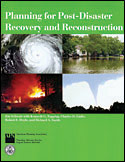
Many of those lessons have become an integral part of my speaking, teaching, and writing over the last 15 years. In Planning for Post-Disaster Recovery and Reconstruction, a substantial guidebook resulting from a project I managed for the American Planning Association under a cooperative agreement with the Federal Emergency Management Agency, I contributed a case study of Arnold, Missouri. This southern suburb of St. Louis garnered substantial FEMA funds to acquire flood-prone properties along the Meramec and Mississippi Rivers in order to reduce its future flood exposure. It was able to do this because of a previously prepared (1991) plan for this purpose. Their success intrigued me with the whole notion of preplanning for potential future disasters, a research interest I have pursued ever since. It was also the focus of the entire 356-page report, published in 1998.
But there were other things I learned from the many affected communities. In the midst of the 1993 floods, I toured Iowa City and Des Moines to learn of the flood recovery efforts underway there. I toured Valmeyer, Illinois, to see the results of a pioneering relocation effort following the 1993 flood. Officials in Cedar Falls, Iowa, contributed plans and studies from their experience with the 2008 flood that allowed me to use their town as an exercise case for a workshop, “Planning for a Disaster-Resistant Community,” originally developed under a contract with FEMA. That same information subsequently has been incorporated into an exercise for another training workshop I helped develop for APA, "Planning for Flood-Resilient Communities." Subsequently, the sharing by officials in Cedar Rapids, Iowa, of their story of resilient recovery from the 2008 floods has allowed us to use their experience in the development of our forthcoming PAS Report, Planning for Post-Disaster Recovery: Next Generation, which greatly revises and updates the 1998 project.
Local officials in Cedar Rapids, Iowa, have annually hosted my University of Iowa graduate planning students for an all-day field trip to see their flood recovery efforts. The many initiatives of the Rebuild Iowa Office have shed new light on state-led efforts for flood recovery that I find intriguing. In any event, I learned to love Iowa during the seven years (1879-1985) that I spent there as both a civic activist and a graduate student at the University of Iowa, where I studied urban and regional planning and journalism.
In coming months and years, I hope that this website will provide an avenue for people to exchange thoughts, experiences, and wisdom with me about what we all learned from the two major floods. I want to find the people who lived through the floods, worked through the floods, helped solve the problems created by the floods, and wrestled with the many public policy dimensions of the floods. My goal is focused toward issues of planning and land use: I want to know:
- What we learned about the problems we created over time;
- How we made the floods worse than they needed to be;
- What we learned about the problems we created over time;
- What we were and are able to change in our public behaviors and policies;
- What we now know about what works and what does not in mitigating flood damages;
- To what extent planners and public officials are heeding the lessons of the impacts of new development in floodplains;
- How we are sorting out the responsibilities of various levels of government for a wide variety of tasks related to flood safety;
- What impacts the 1993 and 2008 floods have had in shaping public consciousness, public policy, and the law.
These are just a few of my questions. I want to see as many plans, studies, and ordinances from both eras as possible, from as many communities as possible, and hear from as many citizens, planners, floodplain managers, public works officials, local elected officials, and others with a passionate but informed interest in the subject as possible. If you wish to contact me with information you think might improve the end product when I write the book, click here.
Website Design by Windy Mountain Graphics


